
Hold the line
Vol #277: June 11th, 2026

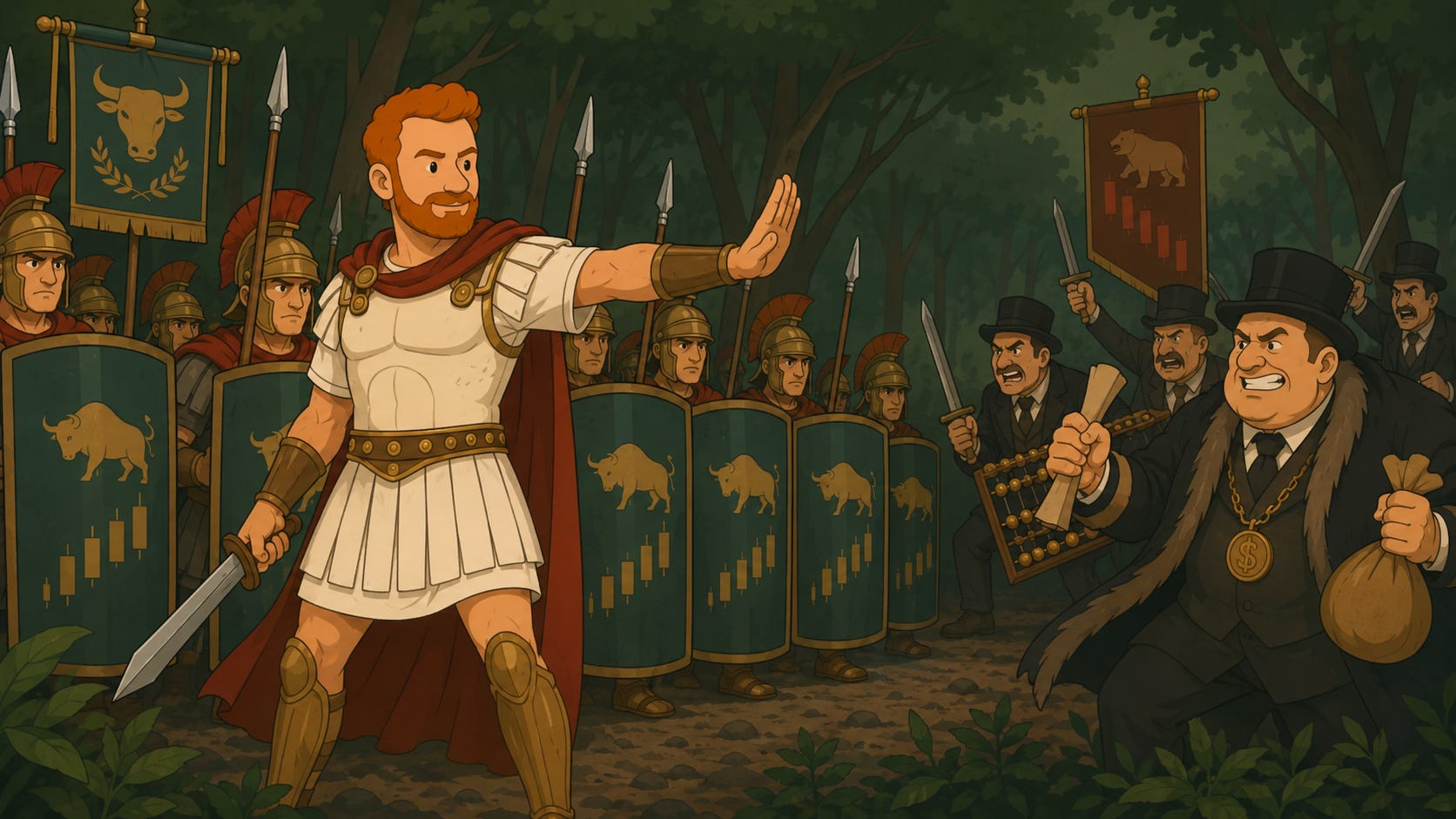
“Hold the line!”
In the epic opening battle scene of the film Gladiator, General Maximus rallies his troops for yet another campaign on the Germanic front. Before the attack, he inspects the troop placements, and ensures the various components of their attack are perfectly timed. With nothing but bludgeoning hand to hand combat ahead of them, maintaining proper position is a matter of life and death.
While the Romans were likely better fed and equipped, the key to their success was more about discipline and training. A cohesive unit was able to grind down enemy forces, but as soon as it broke they became vulnerable.
It’s unlikely that they would have been using fire pots in a deep woodland battle, and the Germanic tribes were a bit more sophisticated than the portrayed furry woodland gnomes- that’s all Hollywood. But the discipline and strategy of the army is fairly accurate. Bolstered by deep supply lines that allowed Emperor Marcus Aurelieus to quickly arrive and celebrate, the Roman army succeeded through organization.
Set around 180AD, this was peak Rome. While the cracks were showing in domestic politics, the empire expansion engine was functioning at its best. A well oiled machine, built on trust, discipline, and infrastructure.
It’s no surprise that success comes from hard work. Whether you’re training for a marathon or studying to pass the Bar exam, the grind is what’s real. It takes hours and endless repetitions to earn those muscles and get something right. A series of little decisions and discipline results in productive outcomes.
Missing one training session isn’t going to put you out of contention. Life happens. But the tiniest lack of discipline is insidious. The successive excuses get easier. ‘I only ran twice this week’ becomes ‘I got a run in’, becomes ‘its been two weeks since I ran.’
Russell Crowe’s character isn’t bellowing at the top of his lungs for the army to hold the line because it’s easy.
The pressures and temptations creep in from every angle. Our inner foil is arguably the most difficult enemy, but external forces with competing agendas also pressure decisions and lobby for their own self interest.
A single trader has to worry about buying low and selling high. No matter what your style of edge capture, you are focused on extracting the most possible value from a given opportunity - while at the same time reducing to a minimum the risk of negative value.
When you put together a group of traders, the calculus shifts. The combinatorics fly. The firm has to think about how to allocate capital and make adjustments for offsetting positions. Every individual wants to see the collective succeed, while also being the biggest possible share of that pie.
For market makers one of the biggest sources of competition is access to listings. When open outcry trading dominated, this was all about pit selection. Within the pit you might be competing for position against other firms, but internally trading shops had to decide who went into GOOG and who went to MSFT.
Today those opportunities might look roughly similar, and you can placate two traders with a divide and conquer strategy. Everyone’s better off with diversified revenue, and neither product gets saturated.
The questions start to come when Google volume spikes. Maybe it’s a takeover, maybe it’s a corporate scandal. Now we have an imbalance of opportunity, and the Google trader is doing twice the volume. When the Microsoft trader comes asking to switch pits, when do you hold the line?
Over supply of liquidity is a tragedy of the commons. Both within your firm and amongst other shops, traders want to trade the good stuff. That’s all well and good when the demand for liquidity is roughly matched by its supply. Too few market makers means a given order will have an outsized impact on price movements, and too many yields the reverse.
When inputs aren’t moving appropriately, pricing gets distorted, and outcomes become chunkier. If liquidity providers collectively get too greedy and step in front of orders or show too much size, the natural ebb and flow of price discovery is muted.
The flip side is if you become too dogmatic about what the “right” level of liquidity is, you’re missing getting yours while the going is hot. A good trader should know when to push the gas to the max, and when to back off because they’re starting to get burned. With the revenue from the former dramatically outweighing the losses in the latter. Besides, you can only control so much and plenty of other firms are going to get aggressive too.
This week no one is worried about what’s happening in either of those pits though. SpaceX is the one and only allocation that matters. With the IPO on June 12th, the options will list five days later. We all expect volume.
There are a number of options questions that will need to be resolved. What is the right level of implied volatility or borrow rate, and how steep is that call skew going to be? Trading firms will be debating how to most effectively deploy their collective liquidity resources. There are going to be a lot of quotes flying.
Otherwise though this looks like a normal IPO. The same process will take place for listings, just on a different order of magnitude. We can’t say the same for the equity and index side of things.
Much has already been written about how the index providers have been pressured to adjust their rules to include SpaceX in market benchmarks like the Nasdaq 100 and Russell 2000. The argument goes that this company will immediately be so significant to the market, it would be a tracking error to not include it even for a quarter or two.
It’s not just semantics, there are tremendous flows that follow index composition, effectively forcing passive investors to buy into the stock.
The only one that held the line was S&P Global. SpaceX will not be in the S&P 500 until it meets the existing listing and profitability standards. This was considered a momentous decision, even though the firm was following its well hammered rule structure.
It’s undeniable that SpaceX is different. But the time to litigate the listings rules is not when something new comes down the pike. The purpose of indices is to provide a rule based measurement of the market. You can’t be objective when a single issue is at stake.
Perhaps some of the outrage over this kowtowing is overblown. Is it the bread and circus moment for US equities? Probably not. Maybe there does need to be a special process for the megacap IPOs that have grown so large in private markets.
But you don’t debate strategy when you’re face to face with the enemy. That’s for after the battle. Right now your only job is to hold the line.