
Slop art
Vol #283: August 6th, 2026

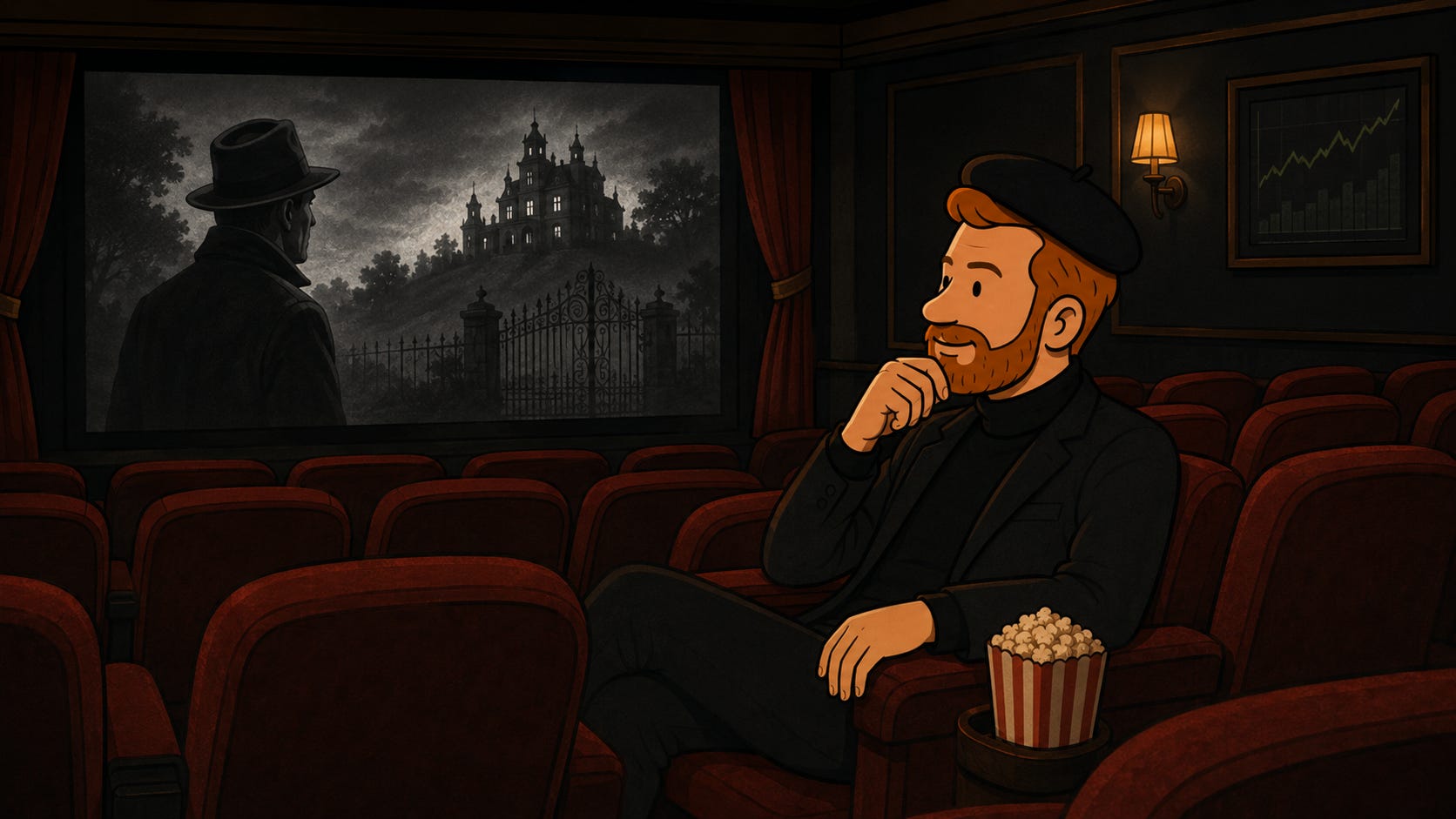
By the time we arrived at Blockbuster the new release shelves were a row of empty VHS cartons, no tapes behind them. Not because we were late per se, just not especially early.
There were plenty of other good movies to choose from. The hard part was negotiating consensus with my sister. Next stop was Lotus for Chinese food, or Venice for pizza. No disagreements with either.
One week I managed to sneak home Wayne’s World, but made the mistake of starting before my parents left for their dinner party. A particularly acute line about “spew into this” red flagged the movie for that evening and set my film studies back several months.
By high school I thought my tastes were maturing, and I’d upgraded from VHS to DVD. No matter that I could only play them on the laptop - watching the third director’s commentary on Fight Club alone in my room was a perfectly good use of two and a half hours.
The more you wanted to learn about film the longer and weirder things got. The Kubrick Collection was an eye opening. You had everything from the ultra long shots of 2001 Space Odysesy to the insanity of war in Full Metal Jacket and the raw sexual violence of Clockwork Orange.
This wasn’t the feel good ninety four minutes of Mike Meyers making puke jokes, but a piece of art that made you shift in your seat. And you came back for more. I never quite got to the beret wearing level of film studies, but I did briefly pretend that Citizen Kane was the greatest film of all time.
It actually took me three tries to find out what “rosebud” was. I was downloading movies on Limewire, and a material percentage of the files out there were garbage. Ten minutes in, fuzz appears. The free for all with media once again meant I didn’t have to leave my room, but also didn’t have to pay. They weren’t yet talking about it in my econ classes, but we were seeing first hand how the economic landscape dictates what kind of content gets created.
Regardless of the display medium, many of the films I’ve been consistently drawn to come from a very specific era. Which was itself a function of the business environment that opened opportunities for visionary directors creating art that made you uncomfortable. And coming back for more.
The 1970s saw some of the greatest films of the century. The Best Picture Oscar nominees would each have swept the field in a lesser decade. And the weakened hold of the old studio system opened the gateway for people like Stanely Kubrick, Martin Scorsese, Francis Ford Coppola, and Steven Spielberg to step in. Imagine a 27 year old filming Jaws today?
Having lost their hit making and culture defining influence, old Hollywood was searching for an answer to what people wanted. They were willing to let auteurs make the final cut instead of a boardroom of suits. And the socio-political backdrop was en feugo.
This was a crucible for pure, authentic, and emotional art. The kind of filme you have to get invested in and give yourself over to the whole process. The droogs hurtling a massive phallic statue doesn’t have quite the same impact when you’re also doom scrolling.
But not everything has to be high art. The Motel 6 also needs something to put on the walls of their 150,000 bedrooms. Just like mediocre noise from Netflix in the background is a genre and AI slop writing is helpful. The good enough bar already includes summaries and interactive wiki use cases. A lot more is inevitably coming soon.
So without diminishing the beauty and glory of what the silver screen can do at its best, it’s important to first accept that slop is a useful and distinct type of content. And given that, we have to consider whether the purpose of any product is slop friendly or not.
Large language models are the ultimate decision by committee. There is a genericism and inoffensiveness to what gets produced. The perfect wall hanging for a traveling salesman, but certainly not something we’re writing about fifty years later. You’ve got to piss some people off to earn that.
Committees work well for endeavors where consistency and risk management are important. The investment committee at a fund acts as a steward and allocator of capital. Multiple interests are intended to dampen rash decisions and the group provides consistency through a procedural framework.
I think an AI will actually become fairly good at making capital allocation decisions. Perhaps at sourcing alpha, but more so for the beta exposure that so many general purpose investors need. Robo advisors have long been doing most of the mechanics, and the softer touch personalization is ripe for a good bot. (The compliance discussions around this must be fascinating.)
For my dear and beloved options, the skip isn’t that much further. The risk transfer implementations crave tools that leverage well guided committee style slop. (I’m thinking “good” slop needs its own non pejorative word. Chip-chat?) The tools currently available to retail investors are helping drive significant volume.
Andy Warhol said “Making money is art and working is art and good business is the best art.” If you want your metier to be an art and not just slop management, you have to tap into something raw. Really get your hands dirty and own the final cut. If you’re going to half ass it, chip-chat already has you beat. Own that. Focus on something more interesting.
Both buy side alpha and structural alpha are inherently orthogonal to the consensus of beta. That’s going to be uncomfortable at times. But there are plenty of opportunities. Everything is an AI bet right now, so individual art - however that’s expressed - is the contrarian trade.